


Lythrum salicaria - Purple Loosestrife, Native Pond Marginal Plant
Free Next Day Delivery (Delivery Rules Apply)
4.8 Star Rating & Trusted by Over a Million Gardeners
Get in contact if you have any questions
The perfect pairings
Lythrum salicaria - Purple Loosestrife, Native Pond Marginal Plant
If you have any questions, you are always welcome to contact us. We'll get back to you as soon as possible, within 24 hours on weekdays.
-
Shipping Information
Use this text to answer questions in as much detail as possible for your customers.
-
Customer Support
Use this text to answer questions in as much detail as possible for your customers.
-
FAQ’s
Use this text to answer questions in as much detail as possible for your customers.
-
Contact Us
Use this text to answer questions in as much detail as possible for your customers.
Product specifications and features
Product Description
Lythrum salicaria - Purple Loosestrife, Native Pond Marginal Plant
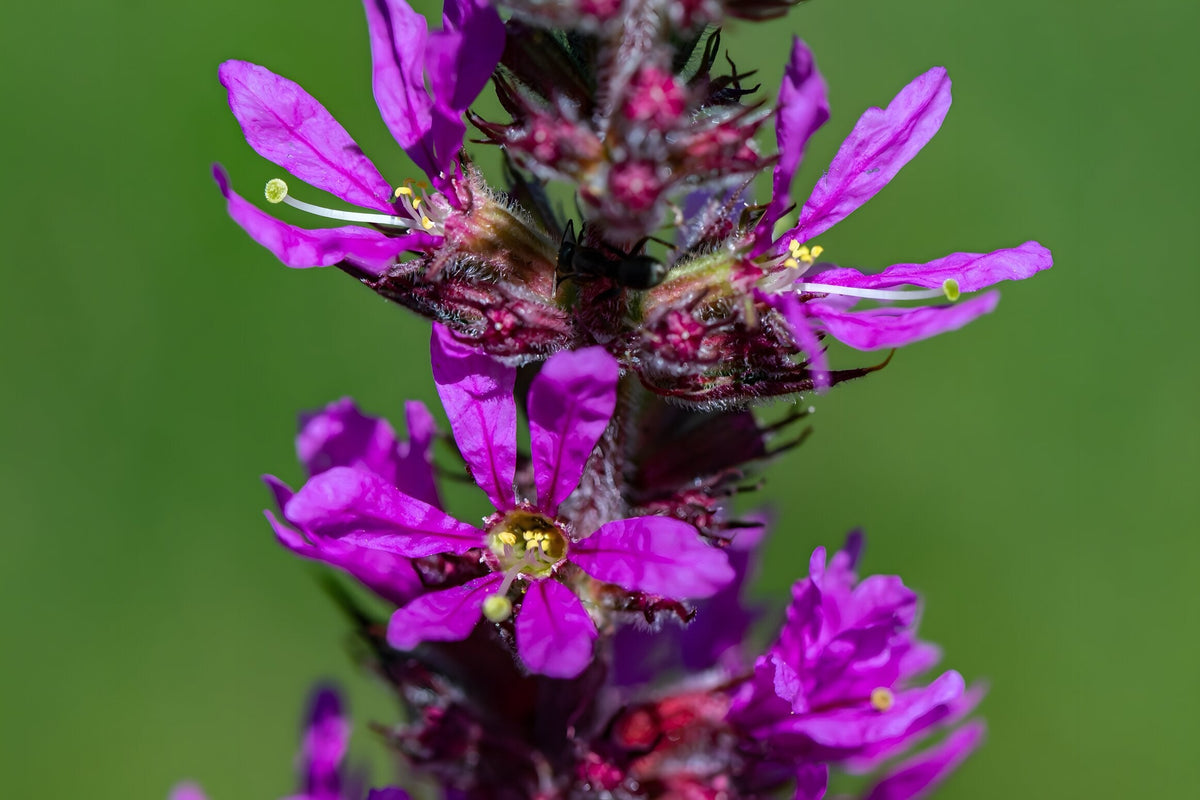
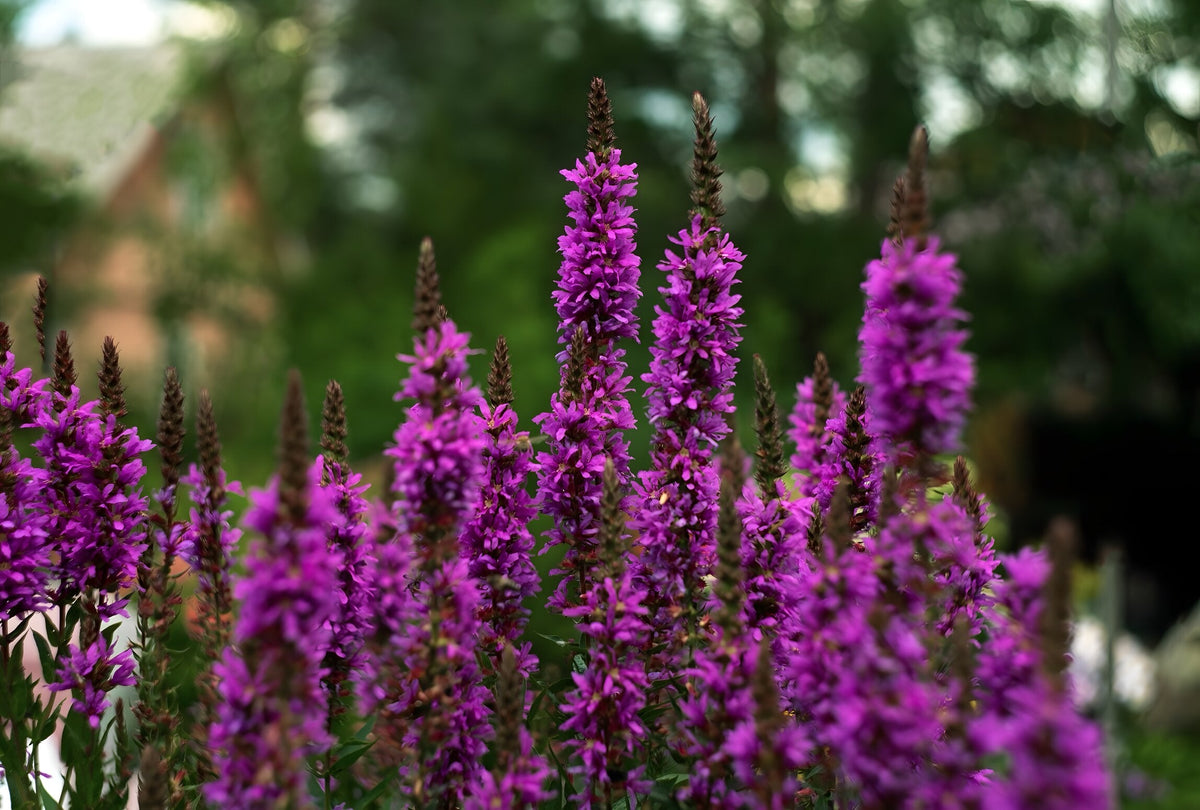
Lythrum salicaria, known as purple loosestrife, is a tall UK native wild flower of reedbeds, fens, marshes and riverbanks. Through the summer it carries dense spikes of vivid purplish-pink to magenta flowers.
Purple loosestrife at a glance
| Botanical name | Lythrum salicaria |
|---|---|
| Common name | Purple loosestrife |
| Plant type | Upright, clump-forming perennial; dies back in winter |
| Height and spread | About 1–1.5 m tall, up to 50 cm wide |
| Flowers | Vivid purplish-pink to magenta, in dense spikes, June to September |
| Position | Full sun |
| Soil | Reliably moist to wet clay or loam; any pH |
| Pond depth | 0–10 cm of water over the crown |
| Hardiness | RHS H7 – very hardy (below -20°C) |
| Native to | UK and Ireland (native wild flower) |
Is purple loosestrife good for wildlife?
Yes. It is on the RHS Plants for Pollinators list, and its nectar feeds long-tongued insects such as the brimstone butterfly, red-tailed bumblebee and elephant hawk-moth.
Where to plant it
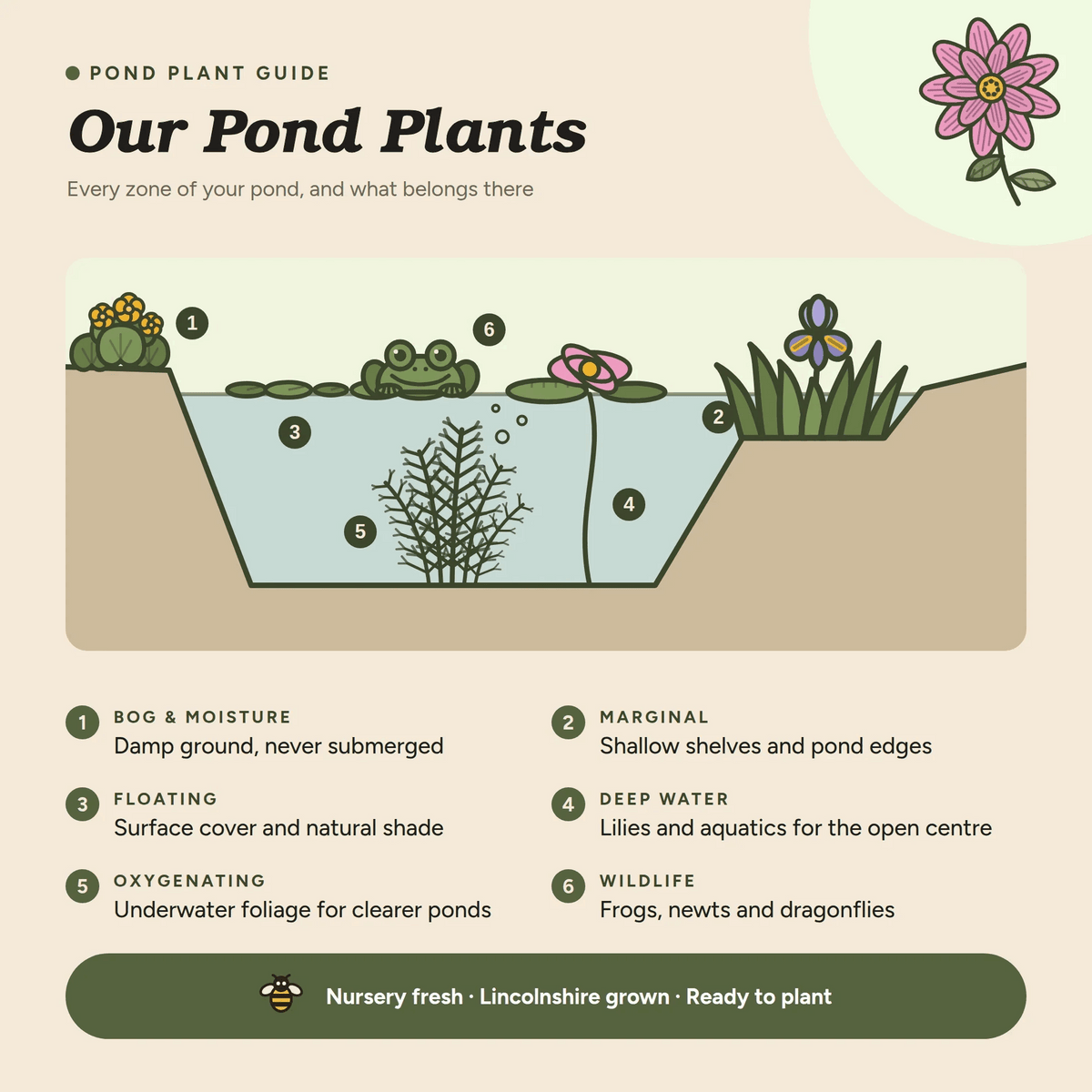
- The shallow edge of a wildlife pond, 0–10 cm deep
- Bog gardens and wet mud
- A sunny spot
How to plant and care for it
Plant from spring to late summer. Cutting the shoots back in spring reduces its height. Deadhead after flowering to stop self-seeding. Dark speckles on the lower leaves in summer are normal.
Is it invasive?
Not in the UK, where it is native and not restricted, though it self-seeds freely. It is a serious invasive weed in North America, so do not send it abroad. Buy nursery-grown plants rather than collecting them from the wild.
Which size should I buy?
Bare-root plants (7 cm, 9 cm, 1 litre and 3 litre) arrive without a pot or compost and are the most economical way to plant a group. Potted plants (9 cm, 1 litre and 3 litre) arrive growing in our peat-free compost and give a faster display. Packs of 3 come in 7 cm, 9 cm, 1 litre and 3 litre bare-root sizes and cost less per plant. The 2x Pot & Compost option is two plants supplied with pots and compost.