

If you have any questions, you are always welcome to contact us. We'll get back to you as soon as possible, within 24 hours on weekdays.
-
Shipping Information
Use this text to answer questions in as much detail as possible for your customers.
-
Customer Support
Use this text to answer questions in as much detail as possible for your customers.
-
FAQ’s
Use this text to answer questions in as much detail as possible for your customers.
-
Contact Us
Use this text to answer questions in as much detail as possible for your customers.
Product specifications and features
Product Description
Eremurus Cleopatra
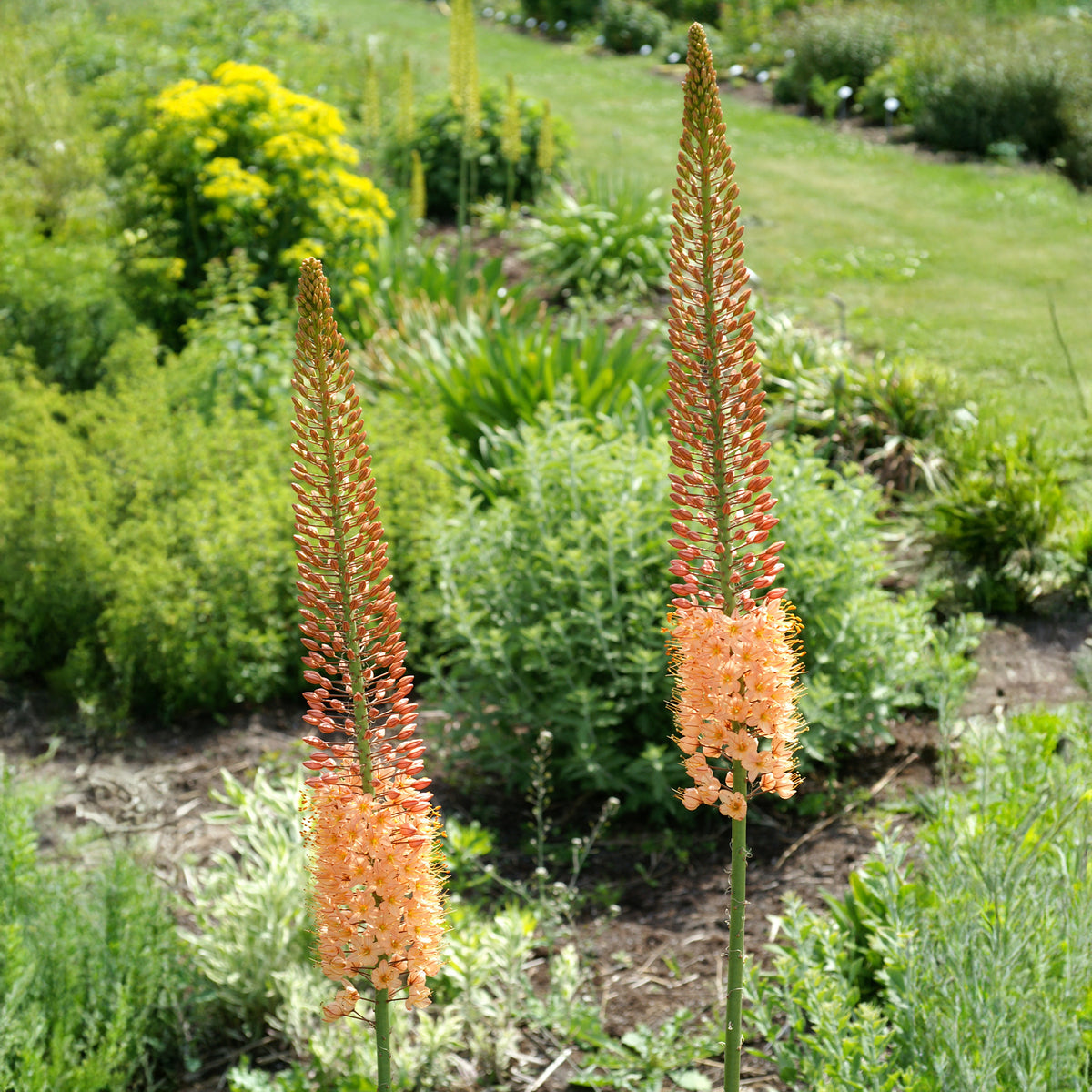
Eremurus Cleopatra - Foxtail LilyThe Eremurus Cleopatra is a stunning variety of the Foxtail Lily, boasting tall spires of vibrant yellow-orange blooms resembling a fiery torch. A true treasure in any garden.
Planting Instructions:When to plant: September to OctoberWhere to plant: Full sun, in well-drained soil with a sheltered positionHow to plant: Plant crowns 10–15 cm deep on a mound of sand or grit, spacing 30–50 cm apartAftercare: Mulch in winter and avoid waterlogging. Allow foliage to die back naturally
Contents: 2 Eremurus Cleopatra (bulb size: I)
CAUTION: Bulbs are for ornamental use only and may cause skin irritation.
Specs & Details
- Established height
- 120-180cm
- Established spread
- 25-40cm
- Plant spacing
- 12 bulbs per m²
- Flower colour
- Orange
- Life cycle
- Perennial
- Habit
- Upright
Features
-

Perfect for Pots
-

Perennial (Regrows)
-

Thrives Full Sun
-

Full Hardy


Plant Calendar
Jan
Feb
Mar
Apr
May
Jun
Jul
Aug
Sep
Oct
Nov
Dec
Plant
Harvest
FAQs
Please read our FAQs page to find out more.
What should Eremurus roots look like when they arrive?
Where is the best place to plant Eremurus?
How do I plant Eremurus crowns?
Why has my Eremurus not flowered or returned?
Is it normal for Eremurus leaves to die back after flowering?
Shop by
Category