




If you have any questions, you are always welcome to contact us. We'll get back to you as soon as possible, within 24 hours on weekdays.
-
Shipping Information
Use this text to answer questions in as much detail as possible for your customers.
-
Customer Support
Use this text to answer questions in as much detail as possible for your customers.
-
FAQ’s
Use this text to answer questions in as much detail as possible for your customers.
-
Contact Us
Use this text to answer questions in as much detail as possible for your customers.
Product specifications and features
Product Description
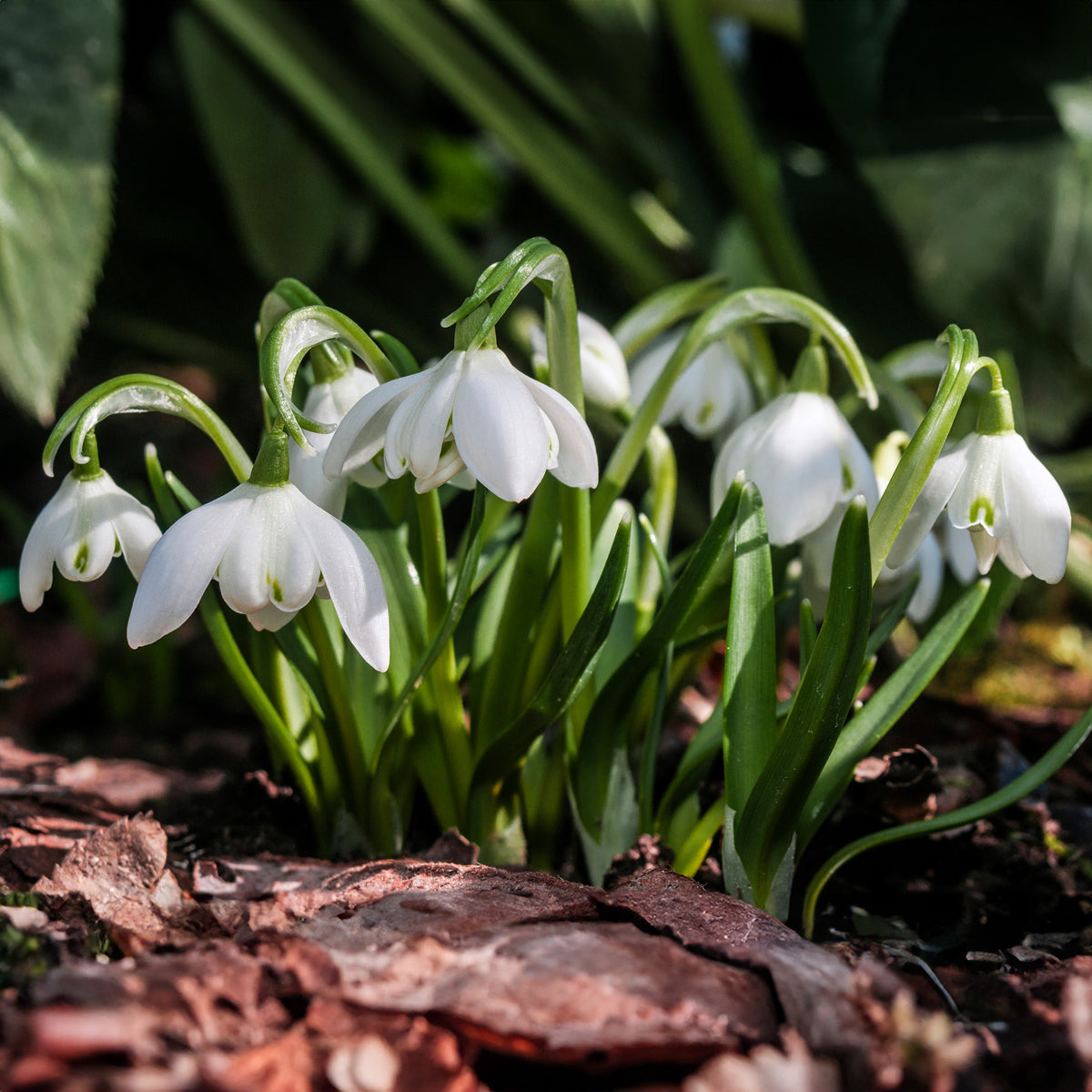
Flore Pleno Double Snowdrop
Double Snowdrops, or Galanthus nivalis ‘Flore Pleno’, produce larger, fuller flower heads with layered white petals and attractive green markings. Their delicate, nodding blooms have a light honey scent and appear on slender grey-green stems above narrow, strap-shaped leaves.
Growing to approximately 10 to 15 cm tall, Double Snowdrops provide welcome colour from January to March. This hardy variety is ideal for naturalising and can gradually multiply to create larger displays year after year.
Plant the bulbs from August to December in moist but well-drained soil. Double Snowdrops grow best in partial shade and are particularly well suited to woodland areas, beneath deciduous trees and shrubs, along pathways and at the front of shaded borders. They can also be grown in pots and containers.
Main Benefits:
- Larger, fully double white flowers
- Attractive green petal markings
- Lightly honey-scented blooms
- Flowers from January to March
- Grows to approximately 10 to 15 cm tall
- Ideal for naturalising
- Suitable for woodland areas and shaded borders
- Can be grown in pots and containers
- Multiplies and returns year after year in suitable conditions
Caution: Ornamental bulbs are not edible and may cause skin irritation.
Specs & Details
- Established height
- 6cm
- Established spread
- 5-10cm
- Plant spacing
- 150 bulbs per m²
- Flower colour
- White, Green
- Life cycle
- Perennial
- Habit
- Clumping
Features
-

Perfect for Pots
-

Perennial (Regrows)
-

Full Hardy


Plant Calendar
Jan
Feb
Mar
Apr
May
Jun
Jul
Aug
Sep
Oct
Nov
Dec
Plant
Harvest
FAQs
Please read our FAQs page to find out more.
Can I plant snowdrop bulbs now in the UK?
Why have my snowdrop bulbs not grown or flowered?
Are small, dry-looking or tightly packed snowdrop bulbs still okay to plant?
Where is the best place to plant snowdrop bulbs?
Do snowdrop bulbs come back and multiply every year?
Shop by
Category