

If you have any questions, you are always welcome to contact us. We'll get back to you as soon as possible, within 24 hours on weekdays.
-
Shipping Information
Use this text to answer questions in as much detail as possible for your customers.
-
Customer Support
Use this text to answer questions in as much detail as possible for your customers.
-
FAQ’s
Use this text to answer questions in as much detail as possible for your customers.
-
Contact Us
Use this text to answer questions in as much detail as possible for your customers.
Product specifications and features
Product Description
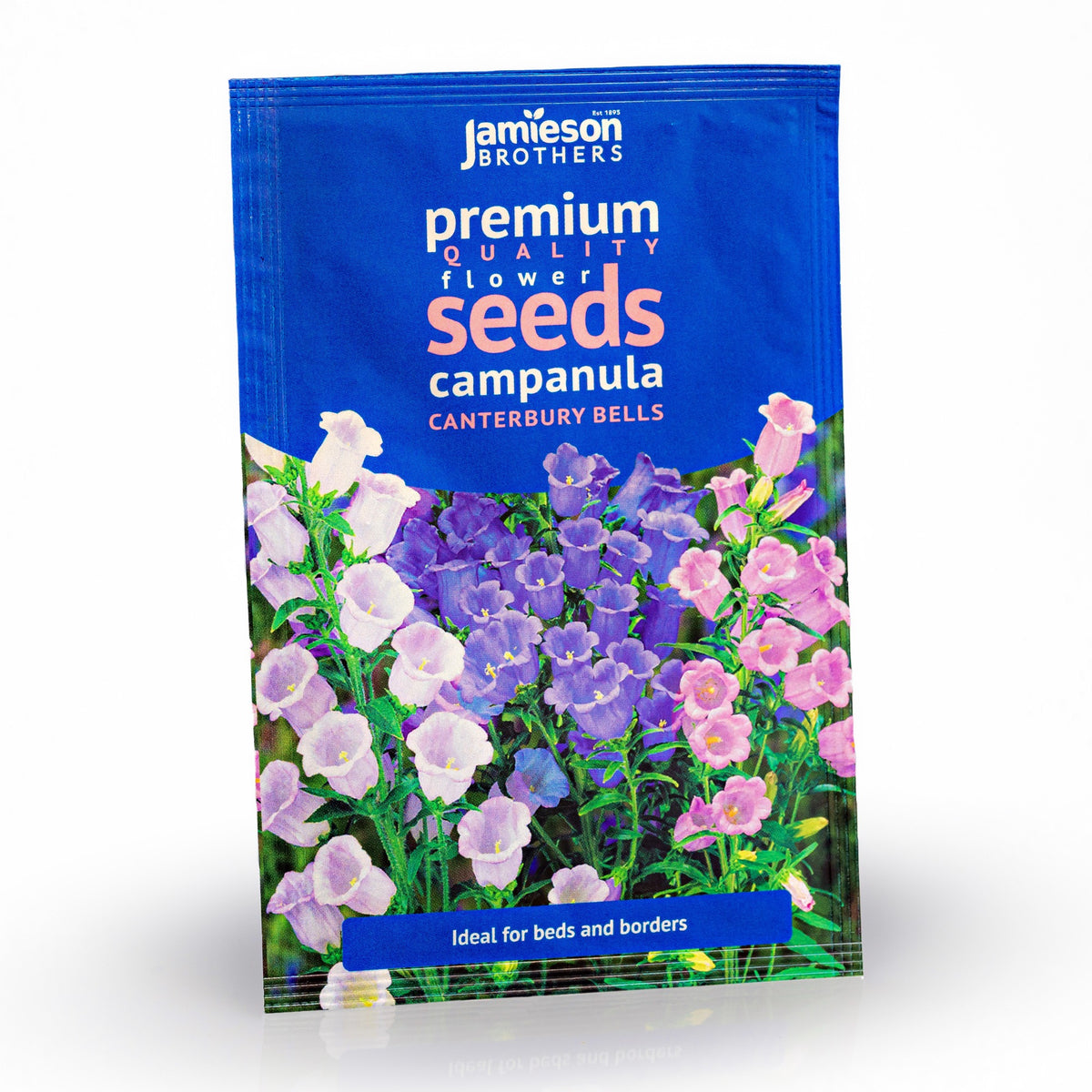
Campanula Canterbury Bells Mixed Seeds (895 seeds)
Jamieson Brothers Campanula Canterbury Bells Mixed Flower Seeds CAMPANULA Campanula medium 'Canterbury Bells Mixed' An easy to grow border plant, with masses of colourful bell shaped flowers. Hardy perennial CHARACTERISTICS: Height: 60cm-90cm Exposure: Full sun to partial shade Flowering Time: June to August Garden Uses: Great for planting in beds or borders. Attracts: Bees, butterflies and other pollinators GROWING INSTRUCTIONS: owing Outdoors - May-June Spacing 40cm Sow the seeds 0.5cm deep direct in flowering location, keep soil moist but be careful not to over-water. Keep in a sunny position. Keep moist and free from weeds. Any well drained soil will do. Thrives in sun or light shade.
Specs & Details
- Established spread
- 20-40cm
- Life cycle
- Perennial
- Habit
- Upright
Features
-

Perfect for Pots
-

Perennial (Regrows)
-

Thrives Full Sun
-

Full Hardy


Plant Calendar
Jan
Feb
Mar
Apr
May
Jun
Jul
Aug
Sep
Oct
Nov
Dec
Plant
Harvest
FAQs
Please read our FAQs page to find out more.
When can I grow Campanula in the UK?
Where is the best place to grow Campanula?
Why has my Campanula not flowered?
Does Campanula spread in the garden?
Can I grow Campanula in pots?
Shop by
Category