

Iris versicolor 'Gerald Darby' - Blue Flag Iris, Pond Marginal Plant
Free Next Day Delivery (Delivery Rules Apply)
4.8 Star Rating & Trusted by Over a Million Gardeners
Get in contact if you have any questions
The perfect pairings
Iris versicolor 'Gerald Darby' - Blue Flag Iris, Pond Marginal Plant
If you have any questions, you are always welcome to contact us. We'll get back to you as soon as possible, within 24 hours on weekdays.
-
Shipping Information
Use this text to answer questions in as much detail as possible for your customers.
-
Customer Support
Use this text to answer questions in as much detail as possible for your customers.
-
FAQ’s
Use this text to answer questions in as much detail as possible for your customers.
-
Contact Us
Use this text to answer questions in as much detail as possible for your customers.
Product specifications and features
Product Description
Iris versicolor 'Gerald Darby' - Blue Flag Iris, Pond Marginal Plant
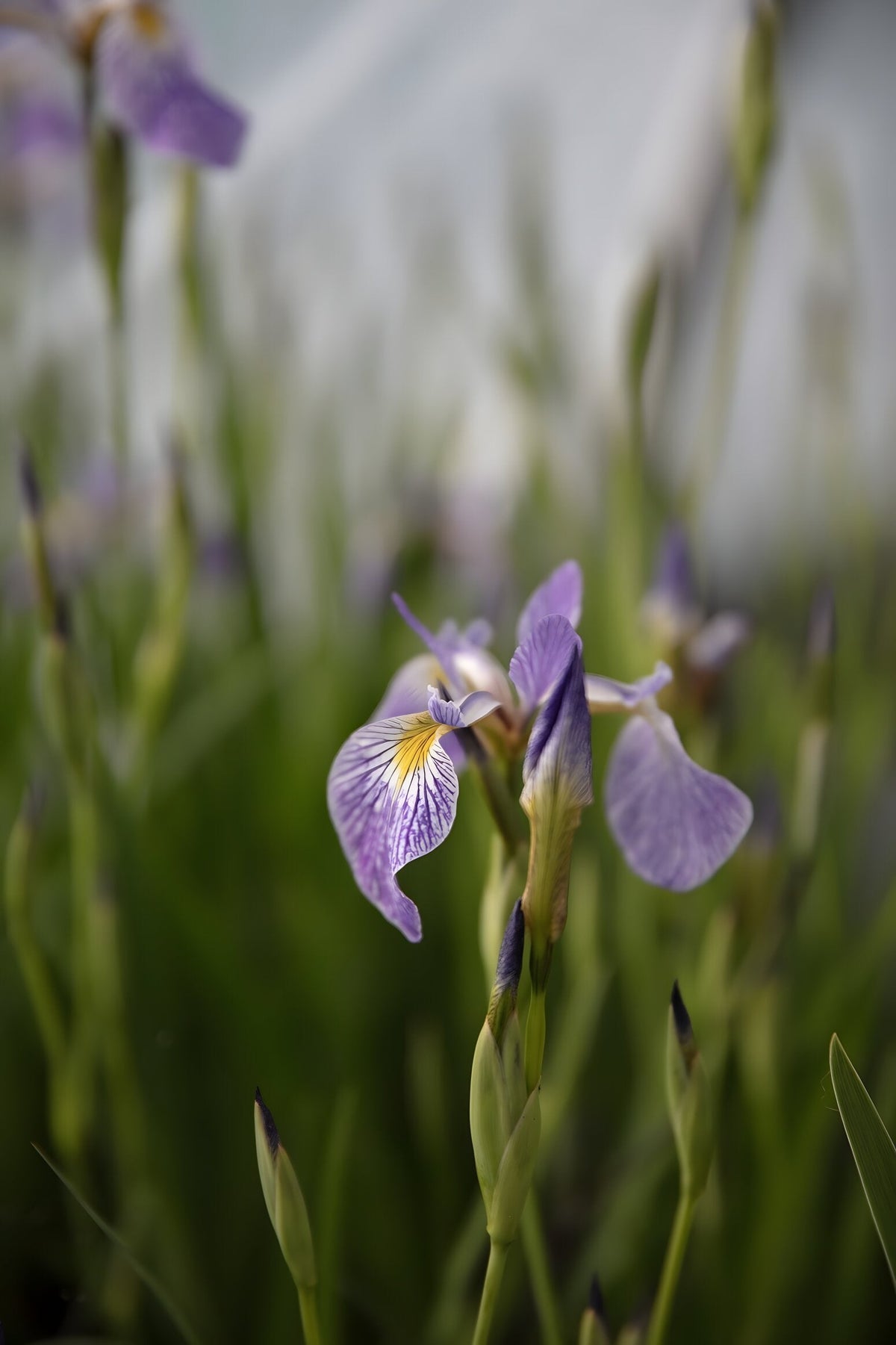
Iris 'Gerald Darby' (listed by the RHS as Iris × robusta 'Gerald Darby', and often sold as Iris versicolor 'Gerald Darby') is a tall, hardy iris with narrow, arching leaves. In spring the flower stems and leaf bases are flushed purple, and in June and July it carries violet-blue flowers with a yellow flash and dark veins.
Gerald Darby at a glance
| Botanical name | Iris × robusta 'Gerald Darby' (syn. Iris versicolor 'Gerald Darby') |
|---|---|
| Common name | Blue flag iris 'Gerald Darby' |
| Plant type | Clump-forming iris; mostly dies back in autumn |
| Height and spread | About 90 cm–1.2 m tall in flower |
| Flowers | Violet-blue with a yellow flash and dark veins, June and July |
| Position | Full sun or part shade |
| Soil | Moist to wet, deep, humus-rich soil |
| Pond depth | Wet soil or up to 10–15 cm of water |
| Hardiness | RHS H7 – very hardy (below -20°C) |
| Native to | Hybrid iris (not UK native) |
Where to plant Gerald Darby
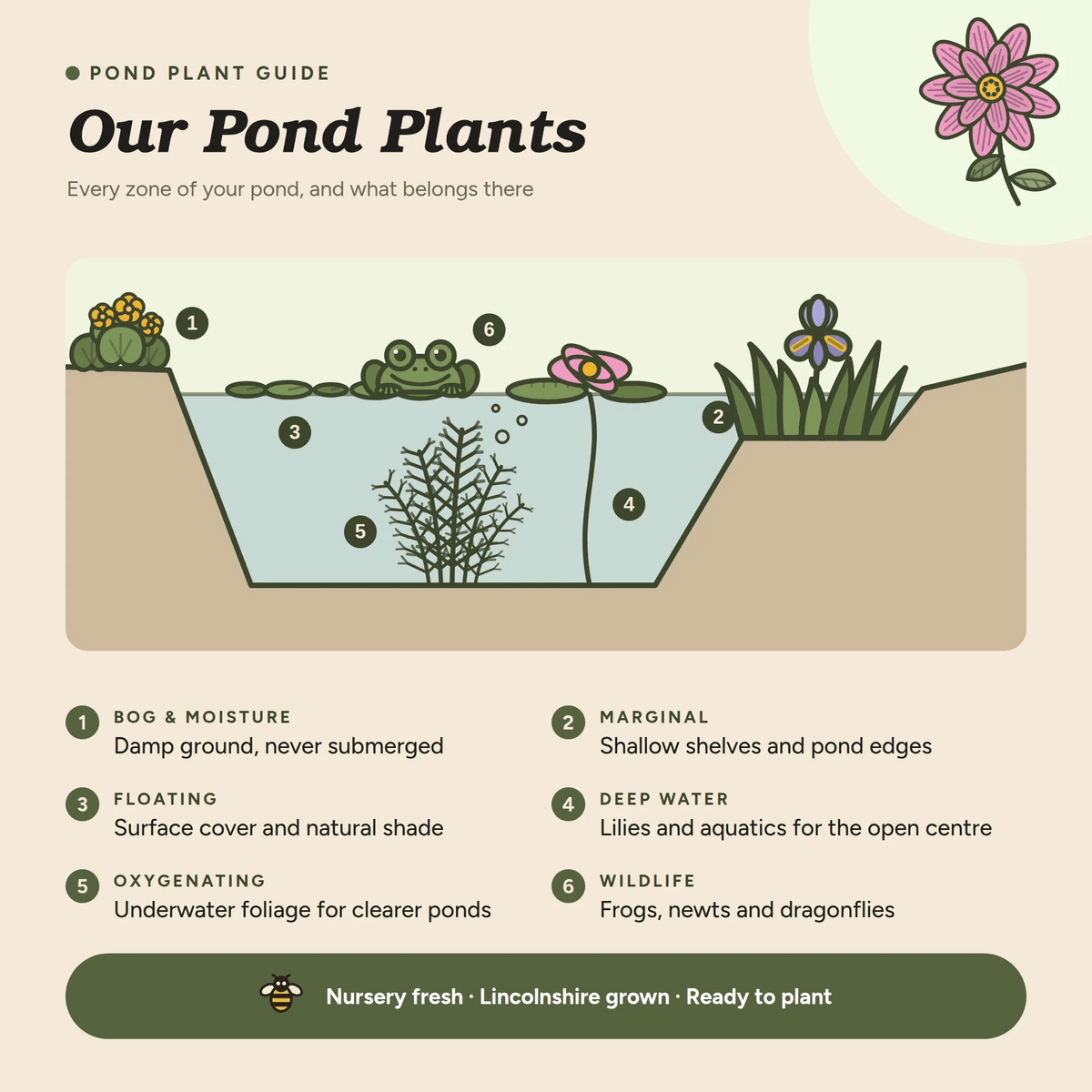
- A pond shelf with up to 10–15 cm of water
- Wet soil at the margins of ponds and streams
- Bog gardens with deep, rich soil
Is it good for wildlife?
The upright stems help aquatic wildlife climb out of the pond. One parent, Iris versicolor, has escaped into British wetlands, so keep it to garden ponds.
How to plant and care for it
Plant from spring to late summer. Watch for slugs, snails and thrips.
Is it poisonous?
Yes. Irises are harmful if eaten by people or pets, so wear gloves when handling it.
Which size should I buy?
Bare-root plants (7 cm, 9 cm, 1 litre and 3 litre) arrive without a pot or compost and are the most economical way to plant a group. Potted plants (9 cm, 1 litre and 3 litre) arrive growing in our peat-free compost and give a faster display. Packs of 3 come in 7 cm, 9 cm, 1 litre and 3 litre bare-root sizes and cost less per plant. The 2x Pot & Compost option is two plants supplied with pots and compost.