

Iris pseudacorus 'Variegata' - Variegated Yellow Flag, Pond Marginal Plant
Free Next Day Delivery (Delivery Rules Apply)
4.8 Star Rating & Trusted by Over a Million Gardeners
Get in contact if you have any questions
The perfect pairings
Iris pseudacorus 'Variegata' - Variegated Yellow Flag, Pond Marginal Plant
If you have any questions, you are always welcome to contact us. We'll get back to you as soon as possible, within 24 hours on weekdays.
-
Shipping Information
Use this text to answer questions in as much detail as possible for your customers.
-
Customer Support
Use this text to answer questions in as much detail as possible for your customers.
-
FAQ’s
Use this text to answer questions in as much detail as possible for your customers.
-
Contact Us
Use this text to answer questions in as much detail as possible for your customers.
Product specifications and features
Product Description
Iris pseudacorus 'Variegata' - Variegated Yellow Flag, Pond Marginal Plant
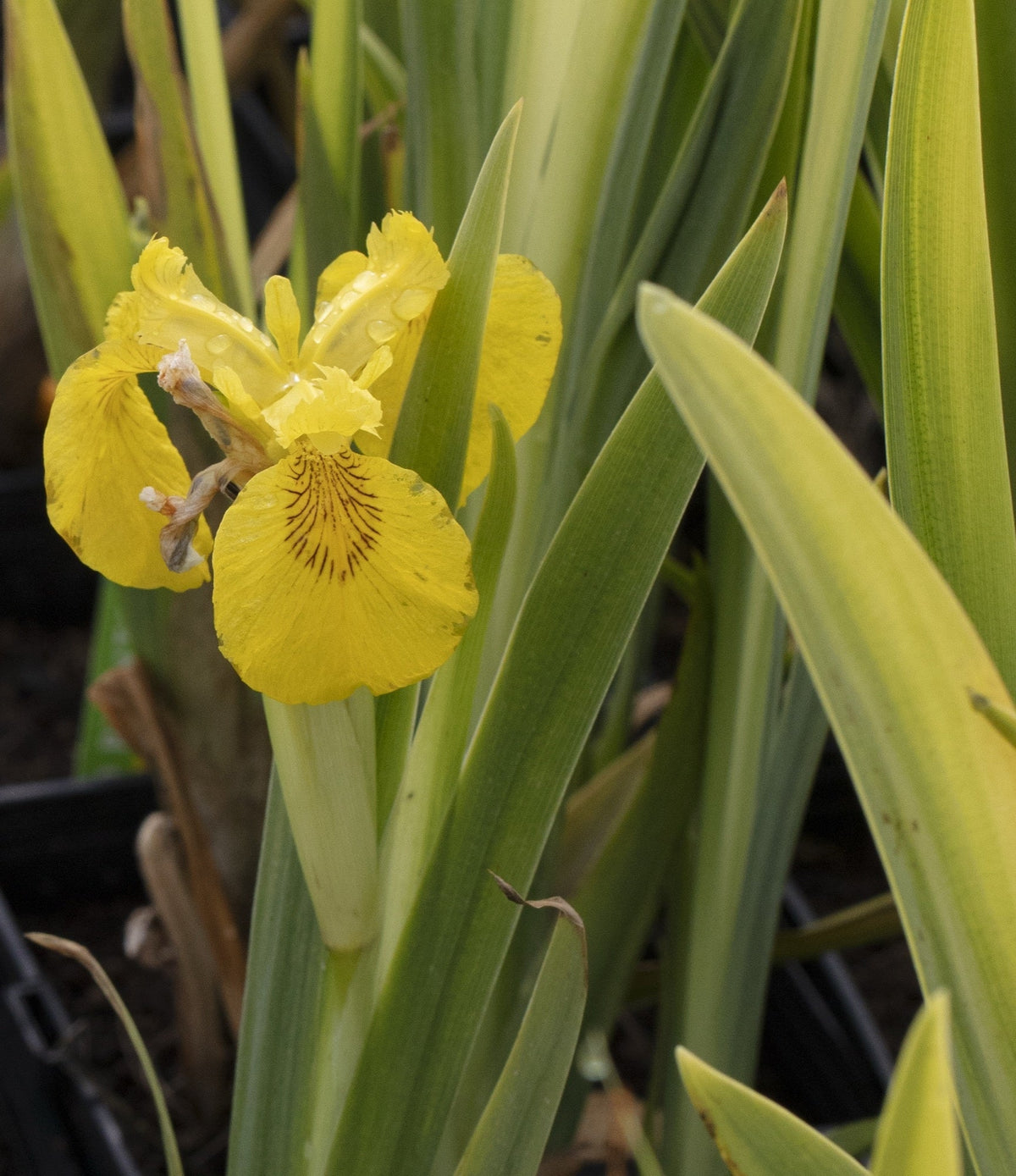
Iris pseudacorus 'Variegata', the variegated yellow flag, is a form of the native yellow flag iris that holds the RHS Award of Garden Merit. In spring its sword-shaped leaves are striped cream and green, fading to green by summer. In May and June it carries yellow flowers with brown veins.
'Variegata' at a glance
| Botanical name | Iris pseudacorus 'Variegata' |
|---|---|
| Common name | Variegated yellow flag |
| Plant type | Clump-forming iris; dies back in winter |
| Height and spread | About 90 cm–1.2 m tall, 50–100 cm wide |
| Flowers | Yellow, up to 10 cm across, with brown veins, May and June |
| Position | Full sun |
| Soil | Wet clay, loam or sand; acid to neutral |
| Pond depth | Wet mud or a pond shelf about 12–26 cm deep (Waterside Nursery) |
| Hardiness | RHS H7 – very hardy (below -20°C) |
| Native to | Variegated form of the UK native yellow flag |
Where to plant it
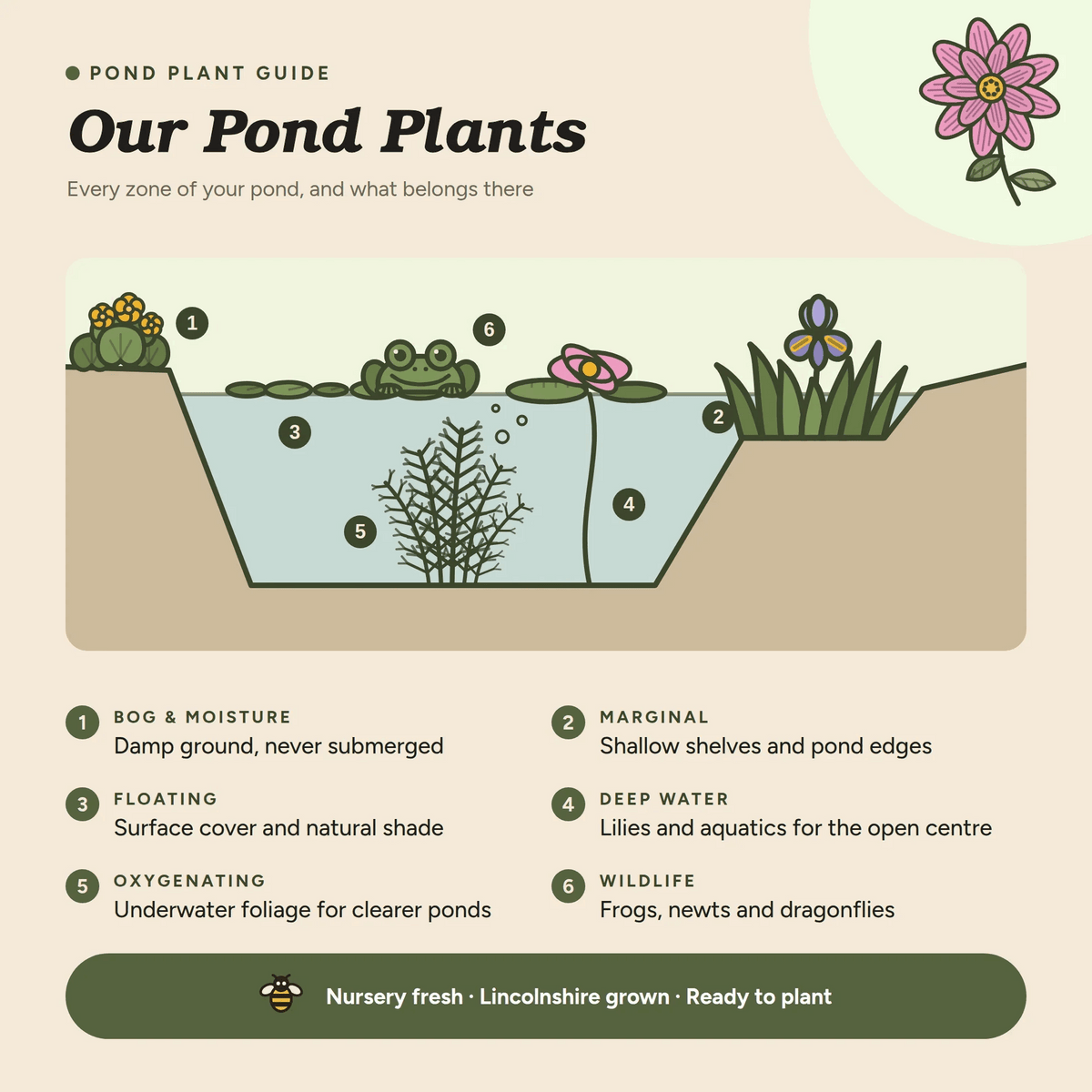
- A sunny pond shelf or wet mud at the margin
- The edges of larger garden and wildlife ponds
- In a basket in smaller ponds
Does it spread?
It can. The RHS says it can become a nuisance if not managed, and yellow flag can take over a small pond, so grow it in a basket. Deadhead before seed falls, as seedlings will not have striped leaves.
Is it good for wildlife?
Yes. It is on the RHS Plants for Pollinators list, and Waterside Nursery says it attracts bees, butterflies, hoverflies and dragonflies. Koi and ducks may graze it.
Is it poisonous?
Yes. Irises are harmful if eaten by people or pets, so wear gloves when handling it.
Which size should I buy?
Bare-root plants (7 cm, 9 cm, 1 litre and 3 litre) arrive without a pot or compost and are the most economical way to plant a group. Potted plants (9 cm, 1 litre and 3 litre) arrive growing in our peat-free compost and give a faster display. Packs of 3 come in 7 cm, 9 cm, 1 litre and 3 litre bare-root sizes and cost less per plant. The 2x Pot & Compost option is two plants supplied with pots and compost.