Product specifications and features

Product Description

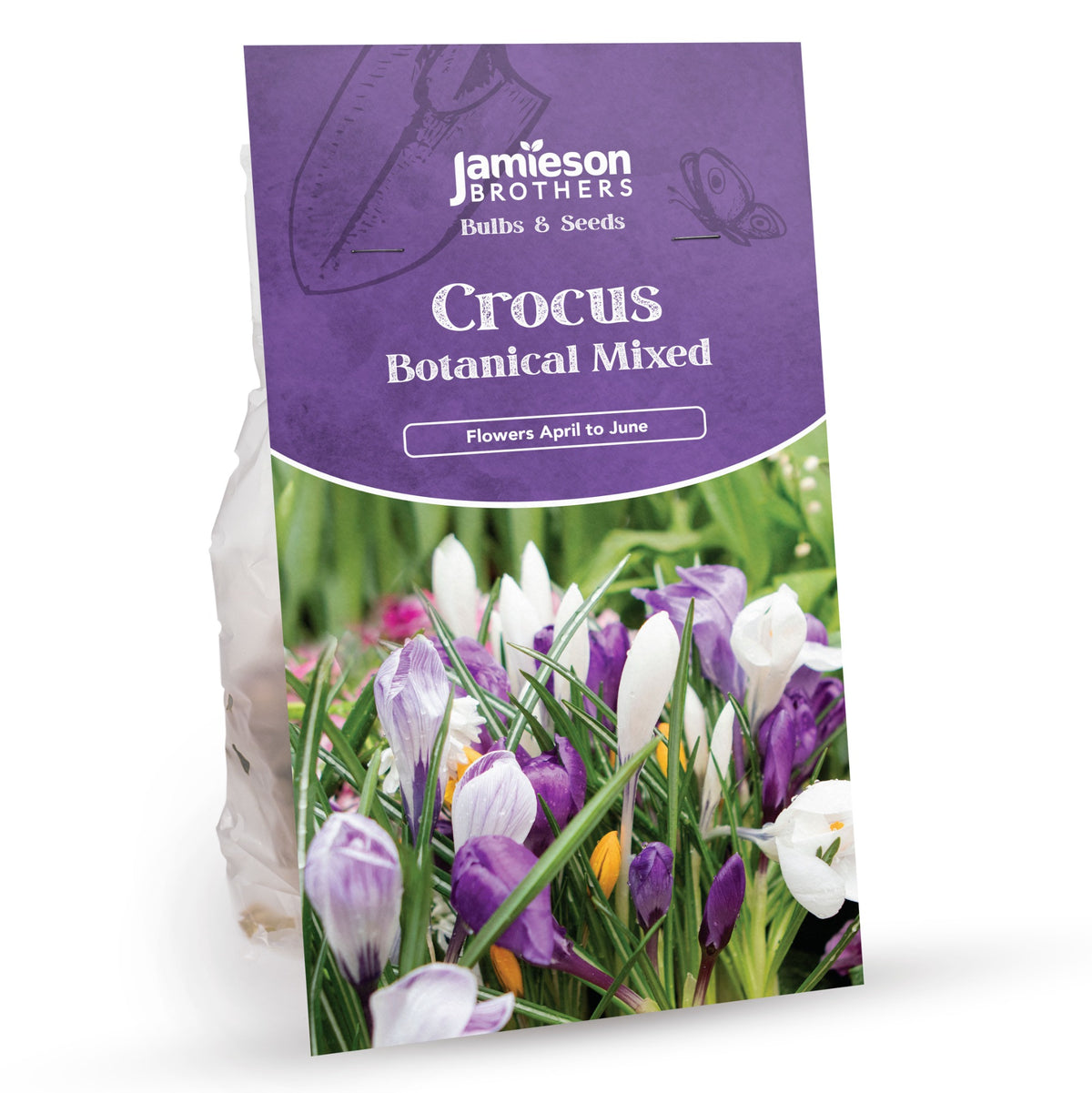
Crocus Botanical Fuscotinctus

The Crocus Botanical Fuscotinctus is a rare and stunning flower with deep purple petals and a delicate yellow center. Its unique color combination makes it a standout in any garden.

Contents:
25 Fuscotinctus (bulb size: 5/+)

Specs & Details

Established height
8-12cm
Established spread
5-10cm
Plant spacing
150 bulbs per m²
Flower colour
Yellow, Brown
Life cycle
Perennial
Habit
Clumping

Features

  • Perfect for Pots

  • Perennial (Regrows)

  • Thrives Full Sun

  • Full Hardy

Plant Calendar


Jan

Feb

Mar

Apr

May

Jun

Jul

Aug

Sep

Oct

Nov

Dec

Plant


From September To October

Harvest


From November To December

FAQs

Please read our FAQs page to find out more.

Can I plant crocus bulbs now in the UK?

Crocus bulbs, which are technically called corms, are usually planted in autumn for early spring flowers. If you are looking for crocus bulbs for planting now in the UK, plant them as soon as possible after delivery while the soil is still workable. Choose a sunny, well-drained spot in a border, container or lawn. Crocus corms do not like sitting in wet soil over winter, so good drainage is one of the most important factors for successful growth.

Why have my crocus bulbs not grown or flowered?

Crocus bulbs can fail to grow if the corms have rotted in wet soil, dried out before planting or been damaged by pests. They need a sunny position and soil that drains freely, especially through winter. Crocuses planted in lawns should not be mown until their leaves have died back naturally after flowering. Birds, squirrels and rodents can also dig up or eat crocus corms, so mesh protection may be useful in areas where this is a problem.

Are small, dry or slightly wrinkled crocus bulbs still okay to plant?

Crocus corms are naturally small, so they can look very different from larger flower bulbs such as tulips or daffodils. A dry, papery outer layer or slight wrinkling is normal while the corm is dormant, provided it remains firm and solid underneath. Plant them promptly rather than storing them in a warm or damp place. Do not plant crocus bulbs that feel soft, wet, badly mouldy, rotten or have a strong sour smell, as these are signs the corm may no longer be viable.

Will crocus flowers look like the photographs?

Crocus bulbs should produce flowers in the colour and form described on the product page. Natural variation in light, temperature and weather can make flowers appear slightly lighter or darker than product images, while phone and computer screens can also affect how colours look. Crocuses generally flower in shades of purple, lilac, yellow and white, creating early colour when little else is in bloom. Healthy corms planted in good light and free-draining soil give the best display.

Do crocus bulbs come back every year?

Most garden crocuses are perennial and can return each year when planted in suitable conditions. Leave the foliage in place after flowering until it has turned yellow and died back naturally, as this helps the corm build energy for the following season. Crocuses can also gradually increase by producing small new corms around the original one. In lawns, delay mowing until the leaves have died back to give crocus bulbs the best chance of returning and spreading.

Didn’t find your answer?

Don't hestitate to contact us